
Organ and Tissue Recovery Services connect donor recovery teams, organ procurement organizations, transplant centers, and specialized transport providers. After recovery, organs must be preserved, packaged, tracked, and moved quickly under controlled conditions. The goal is to protect the donated material and deliver it safely to the appropriate transplant or tissue facility.
What Are Organ & Tissue Recovery Services?
Organ & Tissue Recovery Services are coordinated medical logistics services that support the movement of recovered organs and human tissues from a recovery location to a transplant hospital, tissue establishment, laboratory, or other authorized destination. The process combines clinical coordination, preservation, packaging, documentation, transportation, tracking, and handoff procedures.
In the United States, organ procurement organizations, commonly called OPOs, play a central role in deceased-donor organ recovery. HRSA explains that OPOs are responsible for activities that include donor evaluation, authorization, organ recovery, preservation, and transportation.
For transportation, the process can involve:
- Ground medical transportation
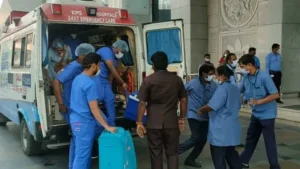
- Ambulance or specialized courier vehicles
- Helicopter transportation
- Commercial aircraft
- Charter aircraft
- Airport-to-hospital transfers
- Recovery-site-to-airport transfers
- Airport-to-transplant-center delivery
- Tissue-bank transportation
- Laboratory or processing-facility transportation
The exact process depends on the type of organ or tissue, recovery method, preservation system, destination, timing requirements, and instructions provided by the responsible clinical organization.
This distinction is important: a courier transports recovered material; the clinical recovery team performs the medical recovery procedure. A transportation provider should not be confused with an OPO, transplant center, tissue establishment, or surgical team.
How Does the Organ Donation and Recovery Process Begin?
The organ recovery process begins after a potential donor is identified, evaluated, and legally authorized for donation, followed by coordination between the OPO, donor hospital, transplant organizations, and clinical teams.
HRSA states that an OPO identifies potential deceased donors, obtains authorization for donation, evaluates donor information, manages donor care after authorization, enters information into the national matching system, coordinates recovery, and arranges transportation.
A simplified process looks like this:
- Potential donor is identified
- A hospital identifies a potential donor.
- The appropriate OPO is contacted.
- Donation authorization is confirmed
- The OPO confirms the legal basis for donation.
- Donor information is collected.
- Medical evaluation takes place
- The donor’s medical and social history is reviewed.
- Potentially transplantable organs and tissues are evaluated.
- Matching and placement occur
- Donor information is entered into the appropriate national system.
- Candidate matching and organ offers take place.
- Recovery is scheduled
- Surgical and procurement teams coordinate the recovery.
- Timing is planned around recipient readiness and preservation requirements.
- Organs or tissues are recovered
- Recovery takes place under controlled clinical conditions.
- Preservation begins
- Appropriate preservation methods are used immediately.
- Packaging and documentation are completed
- Labels, records, and transport documentation are checked.
- Transportation begins
- Ground or air transportation is selected based on the route and timing.
- Receiving facility accepts the shipment
- The material is handed over according to established procedures.
- Transplant or tissue processing continues
- The receiving clinical or tissue organization takes responsibility for the next stage.
Timing is critical because donated organs cannot simply be frozen and stored for days or weeks. HRSA specifically notes that organs remain viable for only limited periods between recovery and transplantation.
What Happens During Organ Procurement Surgery?
Organ procurement surgery is the controlled surgical removal of organs from a donor for transplantation. It is performed by appropriately trained medical teams rather than by transportation personnel.
The exact organ procurement surgery steps vary according to the donor, organs being recovered, donation pathway, and clinical circumstances. However, the process generally includes several coordinated stages.
What Happens Before Surgery?
Before recovery begins, clinical teams confirm the donor information, authorization, medical findings, surgical plan, and organs or tissues that may be recovered.
Important preparation may include:
- Reviewing donor medical information
- Confirming authorization
- Coordinating the OPO
- Coordinating transplant centers
- Preparing the operating room
- Preparing preservation solutions
- Preparing sterile recovery equipment
- Confirming recipient and transplant-center information
- Planning transportation
- Preparing packaging and labeling materials
- Confirming the expected recovery and departure timeline
The OPO also coordinates with transplant organizations and helps arrange the recovery and preservation process. (HRSA)
What Happens During Recovery?
The surgical recovery team accesses the donor’s organs using established surgical techniques. Depending on the donation circumstances, organs may be removed individually or as part of a coordinated multi-organ recovery.
The recovered organ is then prepared for preservation.
This may involve:
- Vascular preparation
- Flushing with preservation solution
- Cooling when static cold storage is used
- Placement into an approved preservation container
- Connection to a machine-perfusion system when applicable
- Documentation of relevant recovery information
A key goal is to minimize unnecessary ischemic time while maintaining organ integrity.
What Happens After an Organ Is Removed?
Once the organ has been recovered, the process moves quickly from the operating room to preservation and transportation.
The sequence can include:
Recovery → Preservation → Packaging → Label Verification → Transport → Receiving Facility → Transplant
Each transition requires communication and accurate documentation.
Why Is Time So Important During Organ Transport?
Time matters because organs continue to undergo biological changes after removal from the donor, even when preservation methods slow those processes.
The period between recovery and transplantation is commonly discussed in terms of ischemic time. Longer periods of ischemia can affect organ condition and transplant outcomes, although acceptable preservation time varies by organ and preservation method.
Historical clinical guidance cited in medical literature gives approximate conventional preservation windows such as:
| Organ | Approximate conventional preservation window* |
| Heart | 4–6 hours |
| Lungs | 4–6 hours |
| Liver | 8–12 hours |
| Pancreas | 12–18 hours |
| Kidneys | 24–36 hours |
| Intestines | 8–16 hours |
These are broad historical ranges, not guaranteed or universal limits. Actual allowable time depends on organ condition, preservation method, transplant-center protocol, and clinical circumstances. (PubMed Central (PMC))
This is why an Organ Transport Service near me search has a very different meaning from an ordinary courier search. The objective is not simply to move a package from one address to another.
The transportation plan must account for:
- Required delivery time
- Route distance
- Traffic
- Airport schedules
- Security procedures
- Weather
- Ground-to-air transfers
- Backup transportation
- Preservation method
- Communication requirements
- Receiving-team availability
HRSA describes safe and timely transportation as an important part of the donation, procurement, and transplantation process.
How Are Donor Organs Preserved Before Transportation?
Donor organs are preserved using methods selected by the clinical team and appropriate to the organ and transplantation plan.
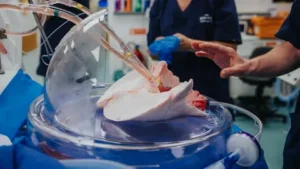
Two major approaches are static cold storage and machine perfusion.
What Is Static Cold Storage?
Static cold storage uses preservation solution and controlled cooling to slow the biological processes that can damage an organ.
A simplified process is:
- The organ is recovered.
- Blood is removed or flushed from the organ as clinically appropriate.
- A preservation solution is introduced.
- The organ is placed in sterile packaging.
- The packaged organ is maintained under controlled cold conditions.
- The container is transported to the receiving facility.
Traditional cold preservation remains an important method in transplantation.
Medical literature describes conventional storage as involving chilled preservation solutions and sterile packaging, often with the organ maintained in a cooled transport container.
What Is Machine Perfusion?
Machine perfusion uses a specialized system to circulate a preservation fluid through the organ.
Depending on the technology, the system can control or monitor factors such as:
- Temperature
- Pressure
- Flow
- Oxygenation
- Perfusion resistance
- Metabolic indicators
- Other organ-specific parameters
Research reviews describe machine perfusion as a way to preserve, assess, and sometimes recondition organs outside the body.
Some systems maintain organs at low temperatures, while other systems use near-normal body temperature and oxygenated perfusate.
What Are Organ Recovery Systems and How Do They Work?
Organ recovery systems are specialized technologies and procedures used to preserve, monitor, or support donor organs between recovery and transplantation.
The term organ recovery systems can refer to several different types of equipment and infrastructure. It should not be treated as the name of one single technology.
Examples include:
- Static cold-storage systems
- Hypothermic machine perfusion
- Normothermic machine perfusion
- Organ-specific transport devices
- Preservation solution systems
- Temperature monitoring devices
- Perfusion monitoring equipment
- Tracking and communication systems
A machine-perfusion circuit may include an organ chamber, pump, reservoir, oxygenator, sensors, heat exchanger, and specialized tubing.
For example, kidney perfusion systems can monitor:
- Perfusion pressure
- Renal blood flow
- Temperature
- Vascular resistance
Published research describes portable kidney perfusion systems capable of controlled perfusion and continuous monitoring during transport.
Does Every Organ Need a Machine?
No.
Machine perfusion is not required for every organ transport. The preservation method depends on:
- Organ type
- Donor circumstances
- Transplant-center protocol
- Organ condition
- Available technology
- Distance
- Transportation plan
- Clinical judgment
Static cold storage remains widely used, while machine perfusion has become an important clinical technology for selected organs and situations.
How Does Ex Vivo Machine Perfusion Help Organ Recovery?
Ex vivo machine perfusion supports an organ outside the donor’s body by circulating a controlled perfusion solution through its vascular system.
This technology can provide several potential benefits:
- Continued organ support outside the body
- Monitoring of organ function
- Assessment before transplantation
- Reduction of some effects associated with prolonged cold storage
- Potential reconditioning of selected organs
- Greater flexibility in some transportation situations
Research has demonstrated clinical use of ex vivo perfusion for organs including the heart, lungs, and liver, while kidney applications have also developed substantially. A recent systematic review describes normothermic ex vivo perfusion as a platform for preservation, assessment, rehabilitation, and experimental therapeutic delivery, although applications and evidence vary among organs.
This technology does not eliminate the need for careful transportation. A machine-perfused organ still requires:
- Correct equipment setup
- Power management
- Appropriate monitoring
- Trained clinical personnel
- Reliable transportation
- Backup planning
- Clear communication
What Is the Difference Between Organ Recovery and Organ Transport?
Organ recovery and organ transport are separate but closely connected parts of the transplant process.
| Organ Recovery | Organ Transport |
| Medical procedure | Medical logistics process |
| Performed by clinical recovery teams | Performed by qualified transport personnel or logistics teams |
| Removes the organ or tissue | Moves recovered material |
| Takes place at a recovery facility | Can involve roads, airports, and aircraft |
| Requires surgical expertise | Requires transport and handling expertise |
| Includes preservation preparation | Maintains the required transport conditions |
| Produces recovery documentation | Maintains transport documentation and handoff records |
| Controlled by clinical protocols | Controlled by transport and organizational protocols |
The distinction is important because transportation providers should operate within the instructions and responsibilities established by the OPO, transplant center, tissue establishment, or other authorized organization.
How Are Organs Packaged for Transportation?
Organ packaging is a controlled process designed to protect the recovered organ and support identification throughout transportation.
HRSA states that OPTN members must meet applicable requirements for packaging, labeling, shipping, storage, and tracking of organs under OPTN Policy 16. It also states that required external, internal, and vessel labels are used when organs are transported outside the donor hospital.
A typical packaging workflow includes:
- Preparing the preservation container.
- Confirming the correct preservation solution or device.
- Securing the organ according to the applicable procedure.
- Completing required labeling.
- Checking identifying information.
- Securing the transport container.
- Documenting departure information.
- Transferring the package to the transportation team.
The purpose is not simply to keep the organ cold.
Packaging must also support:
- Protection from physical damage
- Correct identification
- Sterility and contamination control
- Preservation requirements
- Traceability
- Safe handling
- Handoff verification
What Is an Organ Transport Checklist?
An Organ Transport Checklist is a structured list used to verify that critical transportation requirements have been completed before, during, and after delivery.
A checklist helps reduce avoidable mistakes in a process where small documentation or communication errors can have serious consequences.
A practical checklist can include the following categories.
What Should Be Checked Before Pickup?
- Confirm pickup location
- Confirm receiving location
- Confirm authorized contact
- Confirm organ or tissue identification
- Confirm required documentation
- Confirm preservation method
- Confirm packaging status
- Confirm labels
- Confirm pickup time
- Confirm expected delivery time
- Confirm route
- Confirm transportation method
- Confirm backup route
- Confirm communication contacts
What Should Be Checked During Transportation?
- Package remains secured
- Required environmental conditions are maintained
- Temperature or device information is monitored when applicable
- Location is tracked according to the established procedure
- Delays are reported promptly
- Airport or security procedures are followed
- Handoffs are documented
- Unexpected incidents are escalated
What Should Be Checked at Delivery?
- Receiving facility is confirmed
- Authorized receiving person is identified
- Package condition is checked
- Identification is verified
- Documentation is completed
- Handoff time is recorded
- Any exception is reported
This checklist should be customized to the requirements of the OPO, transplant center, tissue establishment, organ type, preservation technology, and applicable regulations.
How Does Chain of Custody Work During Organ Transport?
Chain of custody means maintaining a documented record of who has responsibility for the material during each stage of transportation.
In organ transportation, chain-of-custody information can help establish:
- Who released the package
- When it was released
- Who accepted it
- Where it traveled
- When it reached the destination
- Whether a delay occurred
- Whether the package remained secure
- Whether any exception was reported
HRSA’s current organ-transport modernization work specifically identifies tracking, location information, condition tracking, and chain-of-custody information as important areas for improving transportation reliability.
This is especially important when several organizations are involved.
A shipment might move through:
OPO → Recovery Hospital → Courier → Airport → Airline → Airport → Courier → Transplant Hospital
Every transition creates an opportunity for delay or communication problems.
A documented handoff process creates a clearer record of responsibility.
How Is Temperature Managed During Organ Transport?
Temperature management depends on the organ, preservation method, equipment, and clinical instructions.
There is no single temperature that applies to every organ shipment.
For traditional cold storage, the organ is maintained in a controlled cold environment using an appropriate preservation solution and transport container.
For machine perfusion, the device may operate within a specific temperature range determined by the technology and organ.
For example, published literature describes certain kidney hypothermic machine-perfusion systems operating around 1°C to 5°C.The transportation provider should therefore follow the instructions supplied by the responsible clinical organization rather than selecting a temperature independently.
Important controls may include:
- Temperature monitoring
- Device monitoring
- Container inspection
- Ice or cooling-media verification when applicable
- Power checks for active systems
- Backup equipment
- Incident reporting
- Communication with the clinical coordinator
What Happens When an Organ Travels by Air?
Air transportation can be used when the distance is too great for practical ground delivery or when the transplant schedule requires faster long-distance movement.
HRSA states that donated organs may travel by ground transportation, charter aircraft, or commercial airlines.
Air transport may involve several steps:
- Organ recovery
- Packaging and labeling
- Ground transfer to the airport
- Security screening
- Airline handoff
- Flight
- Arrival at destination airport
- Ground transfer to transplant hospital
- Final handoff
Commercial-airline procedures can differ by carrier.
HRSA notes that airlines determine their own procedures for accepting organs, including procedures involving reservations, check-in, boarding, seating, securement, and handling.
That means a professional transport plan should confirm airline requirements before departure rather than assuming that every carrier handles organ shipments in the same way.
How Does Airport Security Handle Human Organs?
Human organs are permitted through airport security checkpoints, but transport personnel must follow applicable security procedures.
HRSA states that medical couriers transporting an organ should request assistance from a TSA supervisor or Passenger Support Specialist at the security checkpoint. The courier should also provide the appropriate documentation and account for screening requirements. (HRSA)
A transport plan should therefore include:
- Appropriate documentation
- Airport contact information
- Airline requirements
- TSA procedures
- Adequate security-screening time
- Secure handling
- Backup plans for delays
This is one reason specialized medical logistics differs from standard parcel delivery.
What Happens If an Organ Transport Is Delayed?
A delay should be treated as a clinical logistics event rather than a routine delivery problem.
The appropriate response depends on the organ, preservation method, elapsed time, transport conditions, and instructions from the responsible transplant or OPO team.
A delay response may involve:
- Immediately notifying the designated clinical coordinator.
- Reporting the current location.
- Reporting the estimated delay.
- Providing preservation or equipment information.
- Following clinical instructions.
- Activating an alternative route if authorized.
- Documenting the incident.
- Confirming delivery after the issue is resolved.
Transport personnel should not independently decide that an organ is safe or unsafe for transplantation. That determination belongs to the responsible clinical professionals.
HRSA’s current modernization work emphasizes real-time visibility, alerts, and better tracking to help identify transportation problems and reduce preventable organ nonuse. (HRSA)
How Are Tissue Recovery Services Different From Organ Recovery Services?
Tissue recovery and solid-organ recovery share some logistics principles, but they are not identical processes.
The FDA regulates many human cells, tissues, and cellular and tissue-based products, known as HCT/Ps, under specific regulations. Examples include bone, skin, corneas, ligaments, tendons, dura mater, and certain heart valves. (U.S. Food and Drug Administration)
Solid vascularized organs such as:
- Heart
- Kidney
- Liver
- Lung
- Pancreas
are overseen through the transplant system under HRSA and OPTN structures rather than the FDA’s HCT/P framework. (U.S. Food and Drug Administration)
Tissue transportation can therefore involve:
- Tissue banks
- Recovery organizations
- Processing facilities
- Hospitals
- Laboratories
- Research facilities
- Other authorized destinations
Tissue handling also requires appropriate documentation, packaging, storage, and contamination controls.
What Safety Controls Are Used During Tissue Recovery?
Tissue recovery requires controls designed to reduce contamination and disease-transmission risks.
FDA guidance discusses requirements and recommendations involving:
- Trained personnel
- Recovery-site suitability
- Environmental controls
- Equipment
- Supplies
- Recovery procedures
- Aseptic technique
- Time and temperature parameters
- Recordkeeping
FDA guidance also notes industry recovery time considerations based on whether the body has been cooled or refrigerated. (U.S. Food and Drug Administration)
This demonstrates why tissue transportation should be integrated with the tissue establishment’s procedures instead of treated as a normal delivery.
What Documentation Is Important in Organ & Tissue Recovery Services?
Documentation supports identification, traceability, communication, and accountability.
Depending on the shipment, documentation may include:
- Donor or shipment identification
- Organ or tissue type
- Recovery information
- Preservation information
- Packaging verification
- Label verification
- Pickup information
- Delivery information
- Transportation records
- Temperature information
- Device information
- Handoff records
- Incident reports
- Receiving confirmation
OPTN requirements specifically address organ packaging, labeling, shipping, and storage.
For HCT/Ps, FDA regulations also address labeling, storage, distribution, and recordkeeping requirements.
The exact documentation should always come from the responsible clinical or tissue organization.
What Are the Biggest Risks During Organ Transport?
The main risks are related to time, handling, preservation, identification, communication, and unexpected transportation events.
What Are Common Transportation Risks?
Potential risks include:
- Traffic delays
- Flight cancellations
- Missed connections
- Weather disruptions
- Airport security delays
- Incorrect documentation
- Incorrect labeling
- Packaging damage
- Temperature deviations
- Equipment failure
- Communication failures
- Wrong destination
- Missed handoff
- Route problems
- Lack of backup planning
Not every transport problem results in an unusable organ, but transportation problems can create significant clinical and logistical consequences.
A 2025 HRSA transportation technology assessment noted that the current national logistics environment has historically had limitations in consistency, transparency, and traceability and identified concerns about organs being damaged, delayed, lost, or rendered unusable because of transportation problems.
How Can Professional Organ Transport Reduce Logistics Risks?
Professional medical transportation reduces logistical uncertainty by using structured procedures designed around the specific shipment.
Important practices include:
1. Pre-Trip Planning
The transport team confirms:
- Route
- Pickup
- Destination
- Contacts
- Timing
- Transportation method
- Backup options
2. Clear Communication
The transport team maintains communication with the responsible coordinator and receiving facility.
3. Route Monitoring
Traffic, weather, road closures, and airport conditions can be considered before and during travel.
4. Secure Handling
The package remains protected and secured during movement.
5. Tracking
The shipment’s location can be monitored according to the organization’s procedures.
6. Documented Handoffs
Every transfer of responsibility is recorded.
7. Contingency Planning
A backup route or transportation option can be prepared when appropriate.
8. Immediate Incident Reporting
Unexpected problems are communicated promptly rather than waiting until final delivery.
These controls support the larger goal of getting recovered material to the correct destination safely and within the clinical timeline.
What Should Hospitals Look for in an Organ Transport Service?
Hospitals, OPOs, transplant programs, and tissue organizations should evaluate a transportation provider based on operational requirements rather than ordinary courier features.
Important questions include:
- Does the provider understand medical logistics?
- Is there 24/7 dispatch capability when required?
- Can the provider support urgent transportation?
- Are tracking procedures available?
- Are handoffs documented?
- Can the provider coordinate with hospitals and OPOs?
- Are drivers trained for the required transport procedures?
- Is secure handling available?
- Are backup transportation plans available?
- Can the provider support ground-to-air transfers?
- Is communication available throughout the trip?
- Can the provider follow client-specific SOPs?
- Can required documentation be completed accurately?
A provider should also clearly define the scope of its role.
For example, a courier may transport an organ but does not independently:
- Determine organ viability
- Perform organ recovery surgery
- Decide whether an organ should be transplanted
- Allocate organs
- Select transplant recipients
- Replace the OPO
- Replace the transplant team
Those responsibilities belong to the appropriate clinical and transplant organizations.
What Does an Organ Transport Service Near Me Usually Involve?
Someone searching for an Organ Transport Service near me may be looking for a specialized provider that can support urgent medical transportation between recovery sites, hospitals, airports, transplant centers, or other authorized facilities.
Unlike ordinary courier delivery, the transportation plan may need to account for:
- Time-sensitive delivery
- Medical handling
- Secure packaging
- Tracking
- Documentation
- Controlled conditions
- Multiple handoffs
- Airport coordination
- Emergency routing
- Clinical communication
The exact requirements should be confirmed with the organization responsible for the organ or tissue.
How Does Organ Transport Work in Lawrenceville, GA?
An Organ Transport Service in Lawrenceville, GA may support transportation logistics involving hospitals, recovery locations, airports, transplant facilities, or other authorized destinations in and around the Lawrenceville area.
A Lawrenceville transport plan can involve:
- Confirming the authorized pickup location.
- Receiving the shipment according to the client’s instructions.
- Verifying required documentation.
- Securing the shipment.
- Selecting the appropriate route.
- Monitoring transportation progress.
- Communicating with the designated coordinator.
- Completing the delivery handoff.
- Documenting delivery time and condition.
Because organ transport is time-sensitive, the route should be planned around the clinical schedule rather than based only on normal delivery estimates.
For local and regional transportation, the difference between a planned route and an improvised route can matter when traffic or unexpected delays occur.
How Does Organ Transport Work in DeKalb County?
An Organ Transport Service in DeKalb County may involve ground transportation between medical facilities, recovery locations, airports, laboratories, tissue organizations, and transplant centers.
A DeKalb County route may require coordination around:
- Hospital pickup
- Recovery-site timing
- Traffic conditions
- Airport access
- Receiving-facility availability
- Documentation
- Chain-of-custody procedures
- Backup routing
The transport provider should receive the specific instructions from the authorized organization managing the shipment.
This is especially important because local transportation is only one part of the overall transplant logistics chain.
How Does Organ Transport Work in Douglas County?
An Organ Transport Service in Douglas County can support time-sensitive movement between authorized medical facilities and regional destinations.
The same basic principles apply:
- Verify the shipment.
- Confirm pickup.
- Confirm destination.
- Protect the package.
- Follow preservation instructions.
- Track the movement.
- Maintain communication.
- Document handoffs.
- Confirm delivery.
The specific transportation method depends on the destination and clinical timeline.
For a long-distance shipment, a ground courier may transport the package to an airport, followed by commercial or charter air transportation and another ground transfer.
For a shorter regional route, direct ground transportation may be practical.
What Are the Benefits of a Specialized Organ Transport Process?
A specialized process provides structure around a highly time-sensitive shipment.
| Transportation Feature | Why It Matters |
| 24/7 coordination | Organ recovery can occur at any time |
| Route planning | Helps reduce avoidable travel delays |
| Shipment tracking | Provides better visibility during movement |
| Documented handoffs | Supports chain-of-custody records |
| Secure handling | Helps protect the shipment from physical damage |
| Preservation awareness | Supports the clinical handling requirements |
| Airport coordination | Helps manage air-transport logistics |
| Backup planning | Provides options when unexpected problems occur |
| Direct communication | Helps teams respond quickly to changes |
| Delivery confirmation | Documents completion of the handoff |
These benefits do not replace clinical judgment. Instead, they support the logistics around the clinical process.
Why Is Communication Important During Organ Transportation?
Communication is one of the most important parts of time-sensitive medical logistics because transportation conditions can change quickly.
A useful communication structure may include:
Recovery Team → OPO/Coordinator → Courier → Airport/Airline → Receiving Courier → Transplant Facility
The exact structure varies.
Important information may include:
- Pickup completed
- Departure time
- Current location
- Estimated arrival
- Traffic issue
- Flight information
- Airport issue
- Packaging concern
- Temperature or device concern
- Delivery confirmation
HRSA’s work on organ transport modernization specifically identifies communication, location tracking, condition tracking, and coordination among stakeholders as important areas for improvement.
How Does Technology Improve Organ Transport?
Technology can improve visibility and communication throughout the transportation process.
Possible tools include:
- GPS tracking
- Digital dispatch systems
- Electronic proof of delivery
- Temperature sensors
- Data loggers
- Device monitoring
- Automated alerts
- Route monitoring
- Digital communication platforms
- Centralized tracking systems
HRSA’s current modernization work is focused on developing better technology and data infrastructure so that organs can be reliably tracked and important transport and temperature information can be captured and shared securely.Technology is useful because the transport team may not be able to physically inspect the shipment continuously.
A tracking system can provide information about:
- Where the shipment is
- When it moved
- Whether it is delayed
- Whether an alert occurred
- When it arrived
However, technology should support established clinical procedures rather than replace them.
What Is the Role of the Organ Procurement Organization?
The OPO serves as a central link between potential donors and transplantation.
According to HRSA, OPO responsibilities can include:
- Identifying potential donors
- Obtaining authorization
- Evaluating donor information
- Managing donor care
- Entering donor information into the matching system
- Arranging recovery
- Preserving organs
- Coordinating transportation
- Supporting communication with involved organizations
This makes the OPO different from a standard courier.
The OPO coordinates the medical donation process, while transportation providers support the physical movement of recovered organs or tissues according to established instructions.
What Is the Role of the Transplant Center?
The transplant center evaluates patients, participates in organ acceptance decisions, prepares recipients, and performs transplantation.
Once an organ is accepted, transportation arrangements are coordinated so that the organ reaches the appropriate transplant hospital.
HRSA explains that once an organ is accepted for an intended recipient, transportation arrangements are made and transplant surgery is scheduled. The transplant center therefore needs reliable information about:
- Expected arrival
- Organ identity
- Transport status
- Preservation status
- Any relevant transport event
The transport provider’s role is to support this communication chain.
What Happens After the Organ Reaches the Transplant Center?
After arrival, the authorized receiving team takes over the shipment.
The receiving process can include:
- Confirming the package.
- Checking identification.
- Confirming documentation.
- Checking the package condition.
- Confirming preservation information.
- Completing the handoff.
- Moving the organ into the transplant process.
- Preparing for implantation.
The receiving team, not the courier, determines the clinical suitability of the organ for transplantation.
A transport provider should document the handoff and communicate any transportation issue that occurred during the journey.
How Can an Organ Transport Checklist Improve Reliability?
A checklist helps ensure that critical steps are not forgotten during a stressful and time-sensitive event.
A useful checklist can be divided into four stages.
Before Pickup
- ☐ Pickup location confirmed
- ☐ Receiving location confirmed
- ☐ Clinical coordinator confirmed
- ☐ Transport contact confirmed
- ☐ Organ/tissue identification confirmed
- ☐ Documentation confirmed
- ☐ Packaging confirmed
- ☐ Labels checked
- ☐ Route planned
- ☐ Backup route considered
- ☐ Transportation method confirmed
At Pickup
- ☐ Package received from authorized person
- ☐ Identification verified
- ☐ Package condition checked
- ☐ Handoff time recorded
- ☐ Departure communicated
- ☐ Tracking activated if required
During Transport
- ☐ Shipment secured
- ☐ Required conditions maintained
- ☐ Location monitored
- ☐ ETA monitored
- ☐ Delays communicated
- ☐ Airline procedures followed when applicable
- ☐ Backup plan available
At Delivery
- ☐ Receiving facility confirmed
- ☐ Authorized recipient identified
- ☐ Package transferred securely
- ☐ Handoff time recorded
- ☐ Delivery confirmed
- ☐ Documentation completed
- ☐ Exceptions reported
The checklist should be adapted to the applicable organizational SOP and regulatory requirements.
What Should You Avoid During Organ and Tissue Transport?
Several common mistakes can create unnecessary risk.
Avoid Treating the Shipment Like an Ordinary Package
A recovered organ or tissue is not ordinary freight. It requires specialized coordination.
Avoid Unplanned Route Changes
If a route problem occurs, communicate with the responsible coordinator before making significant changes when possible.
Avoid Unverified Handoffs
The shipment should be transferred only to the appropriate authorized person or organization.
Avoid Guessing About Preservation
Transportation personnel should follow the preservation instructions provided by the clinical organization.
Avoid Delayed Communication
A developing problem should be reported as soon as practical.
Avoid Missing Documentation
Documentation supports traceability and accountability.
Avoid Assuming Every Organ Has the Same Requirements
Heart, lung, liver, kidney, pancreas, intestine, and tissues can have different preservation and timing considerations.
Avoid Assuming Every Airline Has the Same Rules
HRSA notes that individual airlines may establish their own procedures for transporting organs.
How Are Organ & Tissue Recovery Services Becoming More Advanced?
The field is moving toward better tracking, machine perfusion, improved communication, and more integrated transportation technology.
HRSA’s current modernization efforts are focused on improving:
- Tracking
- Data collection
- Transportation visibility
- Condition monitoring
- Incident reporting
- Cross-sector coordination
- Technology infrastructure
At the same time, clinical research continues to explore machine perfusion as a way to assess and preserve donor organs outside the body.
Recent research describes ex vivo perfusion as an increasingly important platform for organ preservation, assessment, and rehabilitation. These developments show that organ transportation is becoming more connected to clinical technology.
The future of organ logistics is not simply about driving faster. It is about creating a coordinated system where:
Recovery + Preservation + Tracking + Communication + Transportation + Handoff
work together.
What Does the Future of Organ Transport Look Like?
The future is likely to involve greater use of digital tracking, integrated logistics systems, advanced preservation technology, and better coordination between organizations.
HRSA’s current work identifies the need for technology-neutral requirements that can support reliable tracking of organs from donor to recipient, secure sharing of important transport and temperature information, and real-time alerts when problems occur. Potential developments include:
- Real-time shipment visibility
- Automated delay alerts
- Better temperature monitoring
- Improved machine-perfusion monitoring
- More standardized data
- Better airport coordination
- Stronger chain-of-custody records
- Integrated courier and transplant systems
- More reliable contingency planning
Technology will not remove every risk, but better visibility can help teams identify problems earlier.
Why Is Specialized Organ Transport Important in Georgia?
Georgia includes major metropolitan areas and healthcare facilities that may participate in complex regional and interstate medical logistics.
For organizations searching for an Organ Transport Service in Lawrenceville, GA, Organ Transport Service in DeKalb County, or Organ Transport Service in Douglas County, the important question is not simply whether a courier can drive to a location.
The more important questions are whether the transportation process can support:
-
- Time-sensitive medical logistics
- Secure handling
- Accurate identification
- Documented handoffs
- Communication
- Route planning
- Tracking
- Airport transfers
- Client-specific procedures
The service area can be local while the transportation route can extend across the state or country.
A shipment beginning in Lawrenceville may ultimately need to reach a transplant center in another city or state.
How Can JaeN Courier LLC Support Organ and Tissue Transportation?
JaeN Courier LLC can be positioned as a medical logistics partner for organizations that require specialized, time-sensitive transportation, subject to the company’s actual operational capabilities, agreements, and applicable requirements.
For Organ & Tissue Recovery Services, the transportation role can involve supporting the movement of authorized shipments according to instructions from the responsible clinical organization.
Potential logistics support can include:
- Scheduled medical transportation
- Urgent transportation
- Recovery-site pickup
- Hospital-to-hospital movement
- Airport transfers
- Secure handling
- Route coordination
- Delivery communication
- Documentation
- Chain-of-custody support
- Regional transportation
For healthcare organizations in Lawrenceville, DeKalb County, and Douglas County, a specialized transportation plan can help connect local recovery operations with regional or national destinations.
The exact service scope should always be confirmed before accepting a shipment because organ and tissue transportation has requirements that vary according to the shipment and responsible organization.
Frequently Asked Questions
What Are Organ & Tissue Recovery Services?
Organ & Tissue Recovery Services support the coordinated recovery, preservation, handling, documentation, and transportation of donated organs and tissues. OPOs and clinical organizations manage the medical process, while specialized transportation providers may handle the physical movement.
How Long Can an Organ Stay Outside the Body?
The allowable preservation period varies by organ, preservation method, organ condition, and clinical circumstances. Traditional preservation windows are generally measured in hours rather than days, making careful transportation planning essential.
What Is an Organ Transport Checklist?
An Organ Transport Checklist is a structured list used to verify identification, packaging, documentation, pickup, route planning, tracking, communication, preservation requirements, handoffs, and delivery.
Can Organs Be Transported by Air?
Yes. HRSA states that organs may be transported by commercial airlines, charter aircraft, or ground transportation. Airline procedures can vary, so transportation teams must follow the applicable carrier, security, and clinical requirements.
Conclusion
Organ and Tissue Recovery Services connect medical recovery with the transportation systems needed to move donated organs and tissues safely to their intended destinations. The process involves much more than moving a package. It requires careful coordination among OPOs, surgical teams, transplant centers, tissue organizations, couriers, airports, airlines, and receiving facilities.
From organ procurement surgery steps and preservation to packaging, tracking, chain of custody, and final delivery, every stage supports the larger transplantation process. Advanced organ recovery systems, machine perfusion, digital tracking, and improved transportation coordination are also changing how the industry manages time-sensitive shipments.
For organizations looking for specialized medical transportation in Lawrenceville, DeKalb County, or Douglas County, GA, JaeN Courier LLC can be contacted to discuss transportation requirements and determine whether its capabilities match the shipment’s specific needs.
Need dependable medical logistics support for an authorized organ or tissue transport? Contact JaeN Courier LLC to discuss the route, timing, handling requirements, and transportation plan.