
What Is Organ Transport?
Organ transport is the time-critical process of moving a donated organ from a recovery hospital to a transplant center using specialized packaging, temperature control, and expedited courier logistics. Every step must protect the organ’s viability, because cold ischemic time the window between organ removal and transplant directly affects transplant success.
More than 49,000 organ transplants were performed in the United States in 2025, and over 109,000 people remain on the national transplant waiting list. Behind every one of those transplants is a logistics chain that has to work perfectly, on the first try, with zero room for error. This guide breaks down exactly what that chain looks like: the checklist, the people involved, the equipment, and the best practices that keep organs viable from the operating room to the recipient.
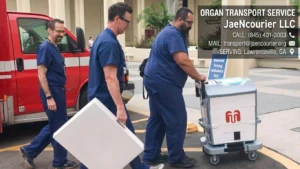
Companies like JaeNcourier LLC, which provides organ transport logistics in Lawrenceville, GA and Marietta, GA, exist to fill this exact need: fast, reliable, chain-of-custody-compliant transport that hospitals and organ procurement organizations (OPOs) can depend on 24/7.
What Is the Organ Transport Checklist?
The organ transport checklist is the standardized sequence of steps a courier or transport team follows to move an organ safely and legally from donor to recipient. It exists to remove guesswork from a process where minutes matter.
A complete organ transport checklist typically includes:
- Confirm the request: verify organ type, pickup location, and delivery deadline with the OPO or hospital.
- Dispatch the right vehicle and driver: match transport mode (ground or air) to distance and time window.
- Verify packaging: confirm the organ is in a certified transport container with proper temperature control.
- Check and log chain-of-custody paperwork: every handoff must be signed, timestamped, and documented.
- Monitor temperature throughout transit: using continuous data loggers, not just a single reading.
- Track transit in real time: GPS monitoring so hospitals and OPOs know exact ETA.
- Communicate proactively: update the OPO, surgical team, and receiving hospital at key milestones.
- Confirm secure delivery: hand the organ directly to authorized medical staff with a signed receipt.
- Complete post-delivery documentation: archive time logs, temperature logs, and signatures for compliance review.
Skipping or rushing any one of these steps can jeopardize organ viability or break the legal chain of custody required by federal transplant regulations.
Why Is a Step-by-Step Organ Transport Process Important?
A step-by-step organ transport process is important because it protects organ viability, ensures legal compliance, and removes room for costly delays. Transplant surgery is scheduled around the organ’s expected arrival time if that window slips, the entire operation is affected.
Here’s what’s at stake at every stage:
- Organ viability organs begin to degrade the moment blood flow stops. A delayed or mishandled transport directly shortens the surgical window.
- Patient safety: the transplant recipient is often already in the operating room, under anesthesia, waiting on the organ’s arrival.
- Legal and regulatory compliance organ transport is governed by federal law (National Organ Transplant Act) and OPTN policy, both of which require documented chain of custody.
- Surgical team coordination surgeons, anesthesiologists, and OR staff schedule their entire day around a confirmed arrival time.
- Cost of failure a failed or delayed transport can mean a lost organ, a canceled surgery, and a patient pushed back to the top of an already long waiting list.
This is why organ transport logistics providers build redundancy into every step backup vehicles, backup routes, and backup communication channels so no single point of failure can derail the mission.
What Are the Key Steps in Organ Transport?
The key steps in organ transport are recovery coordination, packaging, chain-of-custody documentation, transit, and verified delivery. Each stage has its own protocols designed to protect the organ and keep every party accountable.
How Is the Organ Prepared for Transport?
The organ is prepared for transport through a process called cold perfusion and packaging, which slows cellular metabolism and preserves tissue function. Once the surgical recovery team removes the organ, it is immediately flushed with a cold preservation solution to stop warm ischemia (organ damage caused by lack of blood flow at body temperature).
Standard preparation steps include:
- Flushing the organ with a cold preservation solution (such as UW solution, HTK solution, or Celsior)
- Placing the organ in sterile packaging, typically a triple-bag system
- Submerging the sealed organ in an ice slurry inside a rigid, insulated transport container
- Labeling the container with organ type, donor ID, and destination hospital
- Attaching a temperature monitor or data logger to the container
This preparation buys the transport team a limited but workable window to get the organ to the transplant center before it becomes unusable.
Why Does Cold Ischemic Time Matter So Much?
Cold Ischemia Time (CIT) refers to the duration an organ remains chilled and without blood supply during procurement, preservation, and transport. Minimizing CIT is vital to maintaining cell viability, preventing cellular reperfusion injury, and ensuring optimal post-transplantation graft performance.
Cold Ischemic Time Limits & Physiological Specifications
| Organ | Typical Cold Ischemic Time Limit | Physiological & Ischemic Rationale | Transport Urgency Level
|
|---|---|---|---|
| Heart | 4–6 hours | Highly metabolically active tissue with almost no tolerance for delay or hypoxia. Requiring immediate rapid transport. | Maximum / Critical |
| Lungs | Around 6 hours | Sensitive to oxygen deprivation, cellular membrane degradation, and severe reperfusion injury. | Critical |
| Liver | Under 8–12 hours | Larger organ mass with moderate ischemic cellular resilience, but still sensitive to extended cold storage. | High |
| Pancreas | Under 12–18 hours | Moderate cold tolerance; used effectively for both whole-organ transplants and islet cell processing. | Moderate – High |
| Kidney | Under 24 hours | Most tolerant solid organ; can be transported longer distances and safely undergo extended preservation protocols. | Extended Window |
Factors Influencing Ischemic Preservation
- Perfusion Technologies: Hypothermic Machine Perfusion (HMP) and normothermic machine perfusion actively deliver nutrients during transport, extending safe viability windows compared to static cold storage.
- Temperature Regulation: Strict maintenance of hypothermic conditions (typically 0°C to 4°C) suppresses metabolic enzyme activity to preserve cellular ATP levels.
- Transport & Chain-of-Custody: Express courier routing and real-time telemetry logging prevent unexpected delays and thermal deviations during transit.
How Is Chain of Custody Documented?
Chain of custody is documented through signed, timestamped records at every single handoff point, from the operating room to the receiving surgical team. This paperwork trail is a legal requirement, not just a best practice.
A proper chain-of-custody log tracks:
- Who released the organ (recovery team member’s name and credentials)
- Exact time the organ left the donor hospital
- Who took possession during each leg of transport (courier, pilot, second courier, etc.)
- Temperature readings logged at pickup, mid-transit, and delivery
- Who received the organ at the destination (name, title, signature, timestamp)
Every person who touches the organ container signs off. If there’s ever a question about how an organ was handled, this documentation is what proves the process was followed correctly.
What Packaging and Temperature Controls Are Used?
Organ transport uses rigid, insulated, medical-grade containers combined with ice or specialized cooling systems to hold organs within a tightly controlled temperature range, generally between 0°C and 4°C (32°F–39°F) for standard static cold storage. Continuous digital temperature loggers are attached to the outside or inside of the container so the temperature history can be reviewed after delivery.
Some transplant centers now also use machine perfusion devices portable pumps that continuously circulate oxygenated preservation fluid through the organ during transport. This technology, increasingly used for livers and kidneys, can extend viable transport time and improve post-transplant outcomes compared to traditional static cold storage.
How Is Transport Coordinated With Hospitals and OPOs?
Transport is coordinated through direct, real-time communication between the courier, the Organ Procurement Organization (OPO), the donor hospital, and the receiving transplant center. Coordination typically runs through a dedicated transport desk or dispatcher who manages timing across every leg of the trip.
Key coordination touchpoints include:
- Initial dispatch call confirming pickup time and organ type
- Real-time GPS or phone updates during transit
- Immediate notification of any delay (traffic, weather, mechanical issue)
- Final confirmation call before arrival so the surgical team can time the recipient’s anesthesia
- Delivery confirmation directly to OR staff or the transplant coordinator
Because transplant surgeries are scheduled backward from the organ’s expected arrival, even a 15-minute unexpected delay needs to be communicated immediately so the surgical team can adjust.
What Happens During Transit?
During transit, the courier continuously monitors the organ’s temperature, follows a pre-approved route, and maintains open communication with dispatch and the receiving hospital. Ground transport is typically used for distances under a few hundred miles, while air charter or commercial air couriers are used for longer distances or time-critical organs like hearts and lungs.
Best practices followed during transit include:
- Using GPS tracking so dispatch always knows the vehicle’s exact location
- Avoiding unnecessary stops organ transport vehicles do not make other deliveries en route
- Having a backup driver or backup vehicle on standby for mechanical issues
- Carrying documentation, ID badges, and any required security clearance for airport or hospital access
- Monitoring weather and traffic conditions and rerouting proactively, not reactively
How Is the Organ Delivered and Verified at the Receiving Hospital?
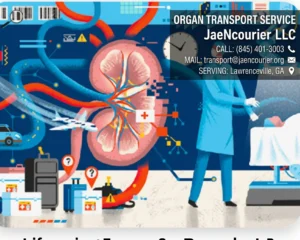
The organ is delivered by handing the container directly to an authorized member of the transplant team, who inspects the packaging, verifies the labeling, and signs a delivery receipt. This final handoff closes the chain-of-custody loop.
The verification process usually includes:
- Confirming the organ ID matches the recipient’s paperwork
- Checking the temperature log for any deviations during transit
- Visual inspection of the packaging for damage
- Signed and timestamped receipt of delivery
- Immediate notification to the surgical team that the organ has arrived
Only after this verification is complete does the transplant surgery officially proceed.
What Equipment Is Used in Organ Transport?
Organ transport relies on specialized medical-grade equipment designed to maintain sterility, temperature, and safety throughout the trip. This isn’t standard courier equipment it’s purpose-built for biological cargo.
Common equipment includes:
- Rigid, insulated transport containers: often cooler-style boxes rated for medical transport
- Sterile triple-bag organ packaging systems
- Ice or ice-slurry cooling media
- Digital temperature data loggers with continuous recording
- Machine perfusion units for select organs (portable pumps that keep the organ perfused during transit)
- GPS tracking devices for real-time location monitoring
- Climate-controlled transport vehicles
- Backup power sources for any electronic monitoring or perfusion equipment
- Secure, tamper-evident seals on the outer container
Every piece of equipment exists to answer one question at the point of delivery: can the receiving team confirm, with documented proof, that this organ was never compromised?
Who Is Involved in Organ and Tissue Recovery Transport?
Organ and tissue recovery transport involves a coordinated team of medical professionals, procurement staff, and logistics specialists working across multiple organizations. No single party handles the entire process alone.
| Role / Stakeholder | Core Responsibility | Workflow Stage | Key Focus / Deliverable
|
|---|---|---|---|
| Organ Procurement Organization (OPO) | Coordinates donor matching, recovery timing, and overall logistics across all involved medical entities. | Pre-Procurement & Logistics Oversight | Donor-Recipient Matching & Logistics |
| Surgical Recovery Team | Removes and prepares the organ at the donor hospital using standardized preservation protocols. | Procurement / Donor Hospital | Organ Retrieval & Packaging |
| Transport Courier / Logistics Provider | Physically moves the organ between facilities with continuous thermal monitoring and rapid transit. | In-Transit / Medical Logistics | Chain-of-Custody & Timely Transit |
| Transplant Coordinator | Manages precise timing between transport progress and the recipient’s surgical schedule. | Pre-Surgical & Recipient Coordination | OR Timing & Recipient Prep |
| Receiving Surgical Team | Confirms and accepts organ delivery, performs final organ evaluation, and executes the transplant surgery. | Reception & Implantation / Recipient Hospital | Organ Acceptance & Implantation |
| Compliance / QA Saff | Reviews chain-of-custody records, telemetry data, and temperature documentation after the fact. | Post-Transport Audit & Quality Assurance | Documentation & Compliance Audi |
What Are Best Practices for Organ Transport Logistics?
Best practices for organ transport logistics center on speed, redundancy, communication, and documentation. Transport providers that specialize in this field build their entire operating model around these four pillars.
- Use dedicated, on-call drivers — not a general courier fleet juggling unrelated deliveries.
- Maintain 24/7 availability — organ donation doesn’t happen on a schedule, so transport has to be ready around the clock.
- Pre-plan primary and backup routes — every trip should have a contingency plan before it starts.
- Verify vehicle readiness daily — fuel, mechanical condition, and equipment checks before every shift.
- Train drivers specifically in medical/biological cargo handling — this is not the same skill set as standard freight.
- Keep constant communication with dispatch — silence during transit is treated as a red flag, not a non-issue.
- Double-check documentation before departure — missing paperwork causes delays at hospital security checkpoints.
- Build relationships with local OPOs and transplant centers — familiarity with hospital layouts and security protocols saves critical minutes.
- Debrief after every run — reviewing what went well (and what didn’t) keeps the process improving over time.
Comparison: In-House Dedicated Courier vs. General Freight/Rideshare for Organ Transport
Detailed Transport Service Comparison
| Evaluation Factor | Dedicated Organ Transport Courier | General Freight or Rideshare Service
|
|---|---|---|
| Availability | 24/7/365 on-call | Business hours or on-demand, not guaranteed |
| Driver training | Trained in biological cargo & chain of custody | Not trained for medical logistics |
| Temperature monitoring | Continuous data logging | Not equipped |
| Route planning | Pre-planned primary + backup routes | Standard GPS navigation only |
| Documentation | Full chain-of-custody paperwork | Basic delivery receipt only |
| Communication | Direct line to OPO, hospital, dispatch | Limited or app-based only |
| Reliability for time-critical cargo | Built specifically for this use case | Not designed for medical urgency |
| Accountability | Signed handoffs at every stage | Single delivery confirmation |
How Do You Choose an Organ Transport Service Near You?
Choose an organ transport service by evaluating their availability, training, equipment, documentation practices, and track record with local hospitals and OPOs. Searching for organ transport near me, or organ transport logistics near me is only the first step the real evaluation happens in the details.
Questions to ask before contracting a provider:
- Are you available 24 hours a day, 7 days a week, including holidays?
- How quickly can you dispatch a driver once contacted?
- Are your drivers specifically trained in chain-of-custody and biological cargo handling?
- What temperature-monitoring equipment do you use?
- Do you provide full documentation packages after each delivery?
- What is your backup plan if a vehicle breaks down mid-route?
- Do you have experience working directly with local OPOs and transplant centers?
- What is your average response and delivery time for local versus long-distance runs?
A provider who can answer all of these clearly and specifically not vaguely is one worth trusting with time-critical, life-saving cargo.
Why Choose JaeNcourier LLC for Organ Transport in Lawrenceville, GA and Marietta, GA?
JaeNcourier LLC provides dedicated organ transport logistics in Lawrenceville, GA and Marietta, GA, built specifically around the demands of time-critical medical courier work. Rather than treating organ delivery as a side service, JaeNcourier structures its operations driver training, vehicle readiness, and dispatch communication around the realities of organ and tissue recovery transport.

For hospitals, OPOs, and transplant coordinators searching for an organ transport service in Lawrenceville, GA, or looking for organ transport logistics near me in the greater metro Atlanta area, working with a local, specialized provider offers a practical advantage: familiarity with regional hospital locations, traffic patterns, and airport routes that directly affects how quickly an organ can move from recovery to transplant.
What this looks like in practice:
- Rapid, on-call dispatch for both scheduled and emergency organ transport requests
- Drivers trained in proper handling and chain-of-custody documentation
- Continuous communication with the OPO and receiving hospital throughout transit
- Coverage across Lawrenceville, GA, Marietta, GA, and the surrounding metro Atlanta region
- Full documentation provided after every delivery for compliance and quality review
What Are Common Challenges in Organ Transport Logistics?
Common challenges in organ transport logistics include traffic and weather delays, tight time windows, hospital security coordination, and equipment reliability. Every one of these challenges is manageable with the right planning, but each one carries real consequences if ignored.
- Traffic and weather delays: mitigated with pre-planned backup routes and real-time rerouting.
- Tight cold ischemic time windows: mitigated by choosing the fastest reasonable transport mode (ground vs. air) for the distance involved.
- Hospital security and access protocols: mitigated by maintaining current credentials and established relationships with facility security teams.
- Equipment malfunction: mitigated by daily vehicle and equipment checks, plus backup temperature-monitoring devices.
- Miscommunication between parties: mitigated by a single point of contact (dispatch) who relays updates to every stakeholder simultaneously.
- Long-distance transport across state lines: mitigated by coordinating ground-to-air handoffs in advance, with a clear plan for airport security clearance.
The providers who succeed in this space are the ones who treat every one of these as a planned-for scenario, not a surprise to react to.
What Regulations Govern Organ Transport in the U.S.?
Organ transport in the United States is governed primarily by the National Organ Transplant Act (NOTA) and overseen operationally by the Organ Procurement and Transplantation Network (OPTN), which is managed under contract by the United Network for Organ Sharing (UNOS). These regulations set the framework for how organs are allocated, tracked, and transported.
Key regulatory points:
- NOTA prohibits the sale of human organs and establishes the national system for organ allocation.
- OPTN policy sets allocation rules and requires documented chain of custody for every organ.
- The Health Resources and Services Administration (HRSA) oversees OPTN’s compliance with federal standards.
- Local and regional OPOs are responsible for coordinating recovery and transport in compliance with these federal policies.
- Transport providers must maintain documentation that can be audited for compliance review.
While the courier or logistics company handling physical transport is typically a contracted service rather than a federally regulated entity itself, it operates within and must fully support this regulatory framework through accurate, complete documentation.
Frequently Asked Questions
Q: How long can an organ survive during transport? It depends on the organ. Hearts and lungs generally must be transplanted within about 4–6 hours of recovery, while livers and pancreases allow roughly 8–18 hours, and kidneys can often tolerate up to 24 hours in cold storage.
Q: What is the difference between organ transport and tissue transport?
Organ transport moves solid organs like hearts, kidneys, livers, and lungs, which have short viability windows and require immediate cold-chain transport. Tissue transport (skin, bone, corneas) generally involves longer viability windows but still requires sterile, temperature-controlled handling.
Q: Who is responsible for coordinating organ transport?
The Organ Procurement Organization (OPO) typically coordinates the overall process, working with the donor hospital, the transplant center, and a dedicated transport or courier service to physically move the organ.
Q: Why does organ transport require specialized couriers instead of standard delivery services?
Organ transport requires continuous temperature monitoring, strict chain-of-custody documentation, and guaranteed 24/7 availability none of which standard freight or rideshare services are equipped or trained to provide.
Conclusion
Organ transport is one of the highest-stakes logistics operations in modern healthcare every step, from cold perfusion and packaging to chain-of-custody documentation and final delivery, exists to protect a narrow, unforgiving window of organ viability. Following a clear, step-by-step checklist isn’t just best practice; it’s what stands between a successful transplant and a lost opportunity to save a life. For hospitals, OPOs, and transplant coordinators in Lawrenceville, GA, Marietta, GA, and the surrounding metro Atlanta area, having a dependable, specialized transport partner on call makes all the difference when every minute counts. JaeNcourier LLC is built for exactly this kind of time-critical, life-saving work reach out today to discuss dedicated organ transport logistics for your facility.